Top 9 cloud computing trends to watch in 2025

PUBLISHED DECEMBER 2024

Explore the latest trends shaping the future of cloud computing in 2025

Cloud computing has revolutionized the way businesses operate by offering a variety of service models and deployment options to meet diverse needs. Nearly every modern organization has embraced digital transformation driven by the cloud. However, emerging technologies, evolving business models and enhanced cybersecurity measures continue to drive on-going transformations in the enterprise cloud market.

In this article, we'll explore the top cloud computing trends in 2025, including industry-specific cloud solutions, green cloud, quantum-enhanced AI cloud and more. It is imperative for business leaders to stay ahead of these trends, seizing opportunities to innovate, differentiate and thrive in the ever-changing landscape of the cloud.


$947.3 billion

2026 CLOUD COMPUTING MARKET FORECAST

16.3% CAGR

GLOBAL CLOUD COMPUTING MARKET COMPOUND ANNUAL GROWTH RATE THROUGH 2026

Businesses shouldn't adopt cloud technologies just for the sake of following the latest trends. The true value of cloud lies in its ability to enable business outcomes in a cost-effective and scalable way. While some trends may not apply to your business, a comprehensive cloud strategy will likely involve combining several of these solutions to maximize benefits.

JASON ASHABRAN, CLOUD LEAD STRATEGIST

Trend 1: Hybrid and multi-cloud strategies

The enterprise cloud ecosystem is becoming a hyperconnected network of services, applications and devices. Recognizing the need for greater flexibility, resilience, compliance and cost optimization, businesses have already begun shifting toward hybrid and multi-cloud strategies. However, this trend is expected to increase as businesses seek to effectively navigate the increasingly complex cloud landscape.

Hybrid cloud strategies allow businesses to use both public and private clouds to enhance efficiency, meet regulatory requirements and place compute resources closest to their customers. Using multiple cloud providers allows them to choose the best provider for each specific workload. This helps ensure business continuity and prevents vendor lock-in. Hybrid and multi-cloud strategies also give businesses a competitive advantage by enabling them to innovate and adapt quickly to market changes.

Section image

Trend 2: Cloud-native modernization

Businesses are increasingly adopting cloud-native modernization solutions to stay competitive and meet the demands of modern consumers. This practice involves creating applications that are specifically designed to run in cloud environments.

Cloud-native modernization involves creating a more resilient and flexible architecture to take advantage of the elasticity offered. Examples of this include platform-as-a-service (PaaS), serverless computing and serverless technologies encompassing both compute and data. Because cloud infrastructure is designed to be transient, resources can be spun up and down rapidly, enabling businesses to bring new features and products to market faster.

Additionally, the modular nature of cloud-native applications gives teams the agility necessary to experiment and innovate. This agility allows businesses to quickly scale and adapt to market changes without affecting the entire system.

Section image
Section image

Trend 3: Edge and fog computing

While traditional cloud computing relies on centralized data centers, edge and fog computing brings computation and storage closer to the data source. Because these models minimize the amount of data that needs to be sent to the cloud, businesses benefit from reduced costs, faster processing, better bandwidth and enhanced user experiences.

Edge and fog computing solutions are particularly beneficial for applications that require real-time processing and low latency, such as autonomous systems and customer-facing applications. The proliferation of 5G networks and internet of things (IoT) devices is further accelerating the adoption of edge and fog computing.

Section image

Trend 4: Digital twins

Digital twins are set to revolutionize various industries as businesses continue to advance their digital transformation strategies. A digital twin is a virtual replica of a physical system, object or process. The digital model receives real-time data from sensors and IoT devices connected to its physical counterpart. Digital twins are being used in various applications, including healthcare, manufacturing, transportation and smart cities.

Companies using digital twins benefit from improved efficiency and enhanced innovation capabilities. Using real-time data, businesses can continuously monitor, analyze and optimize the physical counterpart. Digital twins enable businesses to use virtual testing and prototyping to identify potential areas of improvement and optimize operations through simulations that provide performance insights. They also improve collaboration across teams and locations by providing a shared, real-time model of assets and processes.

Trend 5: Industry-specific cloud solutions

Industry-specific cloud solutions offer tailored services through specialized tools, compliance features and workflows that are designed to meet the unique needs and strict regulatory requirements of each industry. These tailored solutions provide industry-specific functionalities that other cloud services might lack, such as built-in compliance features and integrated collaboration tools.

Industry-specific cloud solutions are already available for several sectors, including finance, healthcare, manufacturing and retail. This trend is expected to expand, with Gartner reporting that by 2027 more than 50% of enterprises are expected to adopt industry cloud platforms to accelerate business initiatives.

Section image

Trend 6: Sustainability and green cloud

Companies like Microsoft and Google are leading the way in green cloud computing, making commitments to achieve carbon neutrality. Facing increasing pressure from the public and regulatory agencies to reduce environmental impacts and adopt sustainable practices, green cloud is expected to become a standard practice for businesses and cloud providers alike.

Green cloud initiatives include:

  • Creating optimized data centers that reduce energy consumption by using energy-efficient hardware, advanced cooling systems and power management techniques
  • Running multiple virtual machines on fewer physical servers to maximize resource utilization
  • Incorporating renewable energy sources such as solar and wind power to power data centers
  • Implementing measures to offset carbon emissions, such as purchasing carbon credits or investing in projects that reduce greenhouse gases
  • Developing code that requires less computational power to run efficiently
  • Minimizing electronic waste by properly disposing or recycling outdated and obsolete hardware

By investing in renewable energy sources, energy-efficient data centers and carbon-neutral cloud services, businesses can minimize the environmental impact of their enterprise cloud systems, helping them meet their sustainability goals.

Section image
Section image
Computer coding, programming and asian man in cybersecurity, software development and html script. Night person from china with information technology career, database code and monitor network safety
Big data concept. 3D render
Two Hispanic Programmers Collaborating in Modern Office

Trend 7: Enhanced security measures

The increased use of cloud-based services to store and process business data has garnered the attention of malicious attackers. With data breaches, phishing attacks, malware and ransomware on the rise, concerns about the privacy and safety of confidential and personal data are a critical challenge businesses must address.

As cyber threats become more sophisticated and data protection regulations like the General Data Protection Regulation (GDPR) and California Consumer Privacy Act (CCPA) become stricter, businesses must implement enhanced security measures to protect their data and operations.

Enhanced security measures for cloud environments include:

  • Zero trust architecture
    This model dictates that all entities, whether inside or outside the network, are not trusted by default. Every access request must be authenticated, and continuous monitoring is implemented to ensure security.
  • Encryption
    Ensures data remains confidential and secure as it moves to, from and within the cloud. Various models exist, including encryption in transit, encryption at rest and end-to-end encryption.
  • Identity and Access Management (IAM) tools
    Multi-factor authentication (MFA) and role-based access control (RBAC) tools that ensure only authorized users can access sensitive data.
  • Security information and event management (SIEM)
    Systems that collect and analyze security data from various sources to detect and respond to potential threats in real-time.
  • Cloud security posture management (CSPM)
    Tools that help prevent vulnerabilities in cloud environments through continuous monitoring for misconfigurations and compliance issues.
  • Blockchain
    A data management framework that uses decentralization, immutability, cryptographic security, consensus algorithms and transparency to secure transactions and data within a ledger across multiple computers.

By implementing these enhanced security measures, businesses can better protect their cloud environments, ensuring data integrity, compliance and overall security.

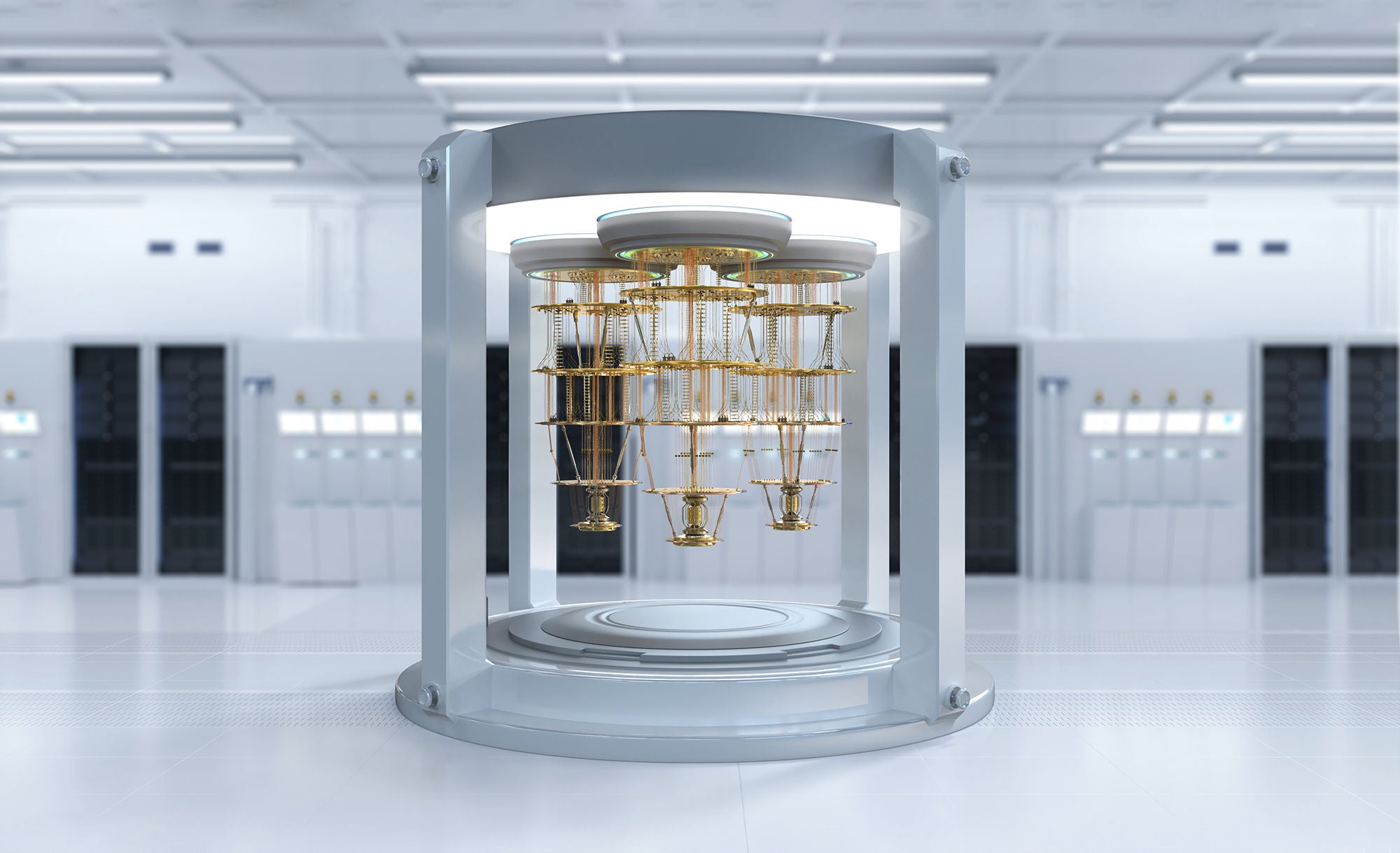
Trend 8: Quantum-enhanced AI cloud

Quantum-enhanced AI cloud combines the power of quantum computing with artificial intelligence (AI) and cloud computing. Its ability to provide unprecedented computational power and advanced AI capabilities make it a crucial trend for businesses looking to innovate and remain competitive.

Early adopters of quantum-enhanced AI cloud include major tech companies such as Microsoft, Google and IBM. These companies are investing heavily in developing cloud-based quantum computing platforms.

Because quantum-enhanced AI can offer more accurate models and faster training times, it is particularly beneficial to industries that rely on large-scale data analysis and real-time decision-making.

Industry-specific applications of quantum-enhanced AI include:

  • Finance
    optimize trading strategies, risk management and fraud detection
  • Pharmaceuticals and healthcare
    improve diagnostic accuracy, personalize treatment plans and accelerate drug discovery
  • Manufacturing
    optimize supply chains, improve quality control and enhance predictive maintenance

Quantum-enhanced AI cloud computing makes quantum models more accessible to businesses, allowing companies to experiment and implement algorithms into their workflows without investing in expensive hardware.

Section image

Trend 9: Global connectivity

Global connectivity in cloud computing is essential for businesses aiming to operate seamlessly on a global scale. It enhances remote work capabilities, improves customer experiences, ensures business continuity and helps businesses meet the varying data privacy and security regulations of different markets.

Providing consistent and reliable high-speed access to data and applications from anywhere in the world requires cloud providers to focus on distributed data centers, network optimization and interoperability. These capabilities are particularly important in driving business and innovation in industries such as finance, healthcare, e-commerce and media and entertainment.

Section image

Let's talk custom solutions

Modernize your infrastructure without disruption. At Kforce, we help you navigate hybrid and multi-cloud environments, optimize costs and build secure, scalable foundations. We turn cloud investment into real performance and momentum.